March. Cold bathroom tiles. I’m standing there in my boxers staring at the scale like it owes me money.
184.2.
A week earlier it said 181.4. I’d lifted three days, eaten clean, hadn’t cheated once. And the scale’s response was to tell me I’d gained three pounds.
I actually said “that’s not possible” out loud. To a scale.
The night before, I’d ordered Chinese takeout. Lo mein. Extra soy sauce. Delicious, and basically a salt bomb. Three pounds of water weight, overnight, from one salty dinner. That was the whole tragedy.
Look, I’m not going to pretend I learned my lesson right then, because I didn’t. I kept letting that number boss me around for months. But eventually it clicked: the scale is the worst possible tool for measuring fitness progress, and it’s the one almost everyone uses as their only tool. I was gaining muscle and losing fat at the same time and the scale couldn’t see any of it. It was like trying to measure temperature with a ruler.
If you’ve ever let a number ruin your morning — and I mean the whole morning, coffee tastes worse, you hate your reflection, the day’s shot — this one’s for you.
Why the Scale Lies to Your Face
Your weight can swing 3 to 5 pounds in a single day. And I don’t mean fat. I mean water and food and timing. Stuff that has absolutely nothing to do with whether your fitness is improving.
Salt, for one. Salty dinner? Your body holds water to balance it out — two, three pounds, just like that. Doesn’t mean anything. Means you enjoyed your lo mein.
Then there’s what a hard workout does. You’d think exercise makes the number go down. Not always. Repairing muscles hold water. So you can have a great workout and “gain” two pounds the next morning. Insulting, honestly.
Carbs do their own thing too. Your muscles store carbohydrate as glycogen, and every gram of glycogen drags about three grams of water along with it. Big pasta dinner — boom, you’re “up” a pound overnight. Cut carbs for a few days and the water drops out, which is why every low-carb diet looks like a miracle in week one. You’re not losing fat. You’re losing water. It always comes back.
But here’s the big one, the one nobody believes until they live it: muscle. Muscle is denser than fat. It takes up less room per pound. So you can lose two pounds of fat and gain two pounds of muscle in the same month — your body is completely transformed — and the scale says “no change.” Zero. Nothing happened.
The scale doesn’t know the difference between fat, muscle, water, and last night’s dinner. It just gives you one number and lets you spiral.
I’m not saying smash your scale with a hammer. (Though I won’t judge.) I’m saying it deserves to be, at best, a minor character in this story. Not the narrator.
What to Actually Measure
Okay. So if the scale is out — or at least demoted — what’s in?
The tape measure. I’m serious. A five-dollar tape measure will tell you more than a two-hundred-dollar smart scale — and don’t get me started on the ones that claim to measure body fat through your feet. I’ve stepped on one three times in a row and gotten three different readings. Random number generator with bluetooth.
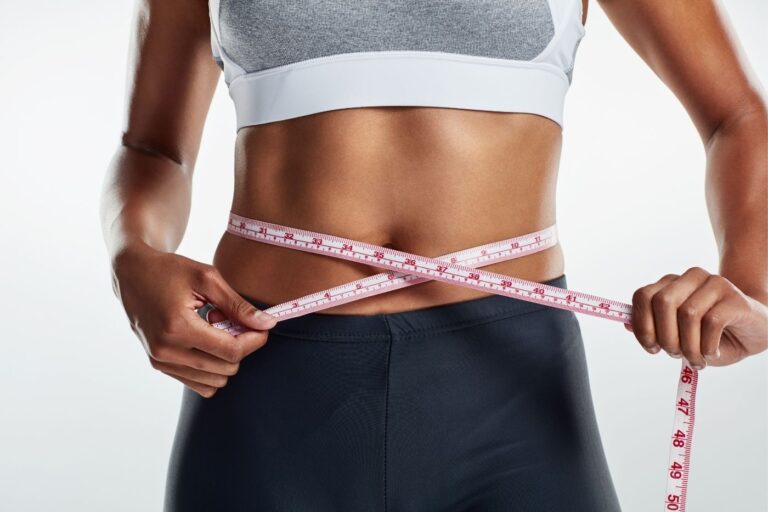
Waist at the navel. Hips at the widest point. Chest. One thigh. Write it down, repeat monthly. Waist shrinking while weight stays flat? That’s the holy grail — fat off, muscle on. This is the metric I trust most, full stop.
Then there are progress photos. Most people do them wrong — different lighting, different angles, bathroom mirror one month and bedroom the next — then wonder why they “don’t work.” Done right, photos catch what numbers can’t: posture, how your shoulders fill out a shirt, definition you miss because you see yourself every day. Compare month one to month four. You’ll be shocked, in a good way.
Strength numbers are the most underrated metric of all. Lifting more than last month? More push-ups? That’s not subjective — you either did 30 pounds for 12 or you didn’t. Keep an actual training log and it becomes the most motivating thing you own. When everything else feels stuck, the log shows you the truth.
The jeans test. Pick one outfit — jeans, whatever — and try it on monthly. Waistband looser? Thighs a little tighter? Shoulders filling the shirt out differently? That’s body composition changing in real time. The scale can say whatever it wants. The jeans don’t lie.
And then there’s just… life. Can you take the stairs without sounding like a broken accordion? Carry all the groceries in one trip? (The only acceptable fitness test, in my opinion.) These are the actual payoffs of getting fit and they show up way before the mirror catches on. If you’re trying to build the habit that makes all of this stick, this guide on staying consistent with exercise is worth your time.
Progress Photos: Stop Doing Them Wrong
Same everything. Same room, same lighting, same time of day. Natural daylight facing a window is the gold standard. Morning, before you’ve eaten, is ideal.
Three angles: front, side, back. Stand relaxed. Don’t flex. Don’t suck in. You’re collecting data, not auditioning. Wear the same fitted thing every time. Same outfit, every month.
Monthly. Not weekly, not daily. Your body does not visibly change in seven days. Set a reminder — first of the month, done.
Keep them private if you want. Locked folder. These are for you. The only person who needs to see month-six-versus-month-one is you.
The Only Tracking System You Need
Every day, thirty seconds: log your workout. Exercises, weights, reps. Phone notes app is fine.
A couple times a week, two minutes: step on the scale — morning, after bathroom, before food — write it down, then ignore the single number. Watch the weekly average. Four-week trend heading right? You’re winning.
Once a month, fifteen minutes: tape measurements, three photos, test outfit, retest a benchmark or two. One note, dated.
That’s it. Daily log, weekly average, monthly check-in.
How Often to Check What
Log every workout. Scale: two to three times a week max, averages only. Measurements, photos, benchmarks, jeans test: monthly.
Daily weigh-ins with meltdowns? Mirror checks three times a day? Not on the list. More data isn’t better — it’s just more noise.
When It Stalls
Two flat weeks is not a plateau. That’s life. I don’t touch anything until 3-4 weeks flat across multiple metrics.
Strength stalled? Under-recovering or under-eating. Sleep? Protein? Last deload week? Sometimes the answer is rest.
Measurements flat but strength climbing? You’re recomping. Great. Keep going.
Everything flat a month? Change one thing. Fat loss: trim ~200 cal/day. These practical weight-loss tips have solid approaches. Muscle gain: eat more, check protein.
Doing everything right and stuck? Boring stuff: sleep under 7 hours, stress, actual consistency. The log doesn’t lie.
Sometimes a stall is your body consolidating before the next jump. Bodies aren’t spreadsheets.
One last thing: if walking is part of your routine — and it should be — this walking for weight loss guide lays out a good framework for steady, sustainable fat loss.
The Actual Point
Fitness was never a number. It’s a direction. Stronger than last month? Moving better? Feeling better? Then it’s working.
Track enough to know you’re progressing. Not so much that tracking becomes the point.
Put the scale in its place, pick your metrics, check on schedule, get back to the work. The numbers follow people who stick around.