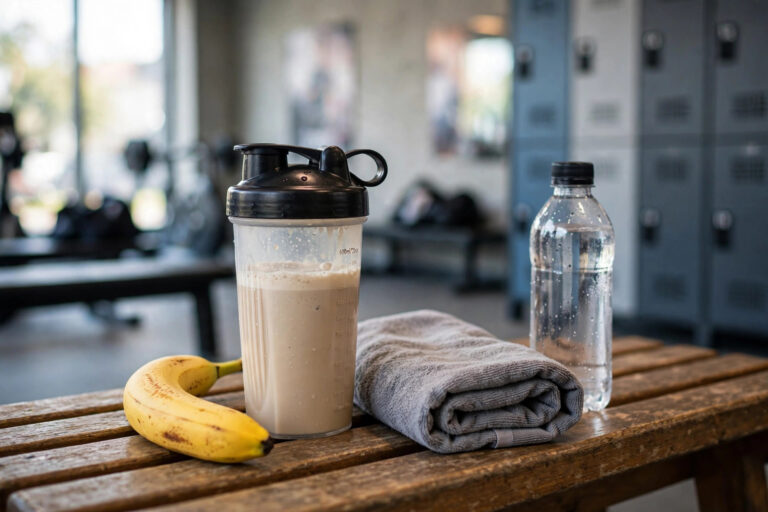
My relationship with food and training got off to a rocky start. I still remember this one Tuesday — I’d skipped lunch because work was chaos, then tried to do a full weights session on nothing but coffee and optimism. I made it about twenty minutes before the room started tilting. The trainer had to sit me down with a cereal bar. That was my introduction to the idea that what you eat around a workout actually matters. The room-tilting incident taught me more than any article ever has.
The opposite mistake came a month later. I’d read that you should ‘fuel up’, so I ate an enormous pasta lunch and went for a run at two. I’ll spare you the details, but I now understand why nobody sprints after a Sunday roast. Somewhere between starving and stuffed there’s a sweet spot, and finding it changed my training completely.
Eating before you train
What I eat beforehand depends on timing. If I’ve got a couple of hours, I’ll have something proper — porridge with a banana, toast with peanut butter, leftover rice with chicken. Carbs for energy, a bit of protein, nothing fancy. The key thing I learned: eat enough that you’re not running on empty, but not so much your stomach is doing all the work.
If I’m short on time — and half my sessions are squeezed into a lunch break — I grab something small about half an hour before. A banana. A handful of dates. Once, memorably, three rice cakes in the car park. It doesn’t need to be a production. Your body just needs something to burn that isn’t your own muscle.
Eating after you train
Afterwards, I eat properly. Not immediately — I don’t sprint home to chug a shake inside some magic thirty-minute window, because that window is mostly marketing. But within a couple of hours I have a real meal with proper protein: eggs on toast, chicken and rice, Greek yoghurt with granola, a big sandwich. Twenty to forty grams of protein, plus carbs to replace what I burned. I eat it at the kitchen table, not standing over the sink.
The mistake I made for ages — and I see beginners do it constantly — was training hard then barely eating, because I thought that’s what being healthy looked like. I’d finish a tough session and have a sad little salad, then wonder why I felt wrecked for days. Muscles can’t rebuild out of nothing. If you did the work, feed the work.
So that’s my entire philosophy: don’t train starving, don’t train stuffed, and eat a proper meal afterwards. It’s not glamorous, it doesn’t need a powder, and it works. A banana before and a real dinner after — anyone can stick to that. Start with the banana.
Sort Your Water Before Your Food
For months I thought my pre-workout food was the problem — flat sessions, headaches halfway through, feeling heavy and sluggish. Turned out I was just dehydrated. I’d drink a coffee, train for an hour on nothing else, and wonder why I felt awful. Water timing is dead simple: drink about half a litre in the two hours before you train, sip steadily during (not gallons — just regular sips), and drink properly afterwards until your pee looks like pale straw. Yes, the pee test. It’s free and it works. One mistake to avoid: chugging a huge bottle ten minutes before training. It just sloshes around in your stomach and makes everything miserable. I learned that one the bouncy way, mid-burpee. Sort the water first, then worry about the food — honestly, half the “nutrition problems” beginners think they have are just thirst in disguise.
The Budget Version Works Just as Well
There was a phase where I spent serious money on “proper” fitness food — quinoa, imported nut butters, a protein powder that cost more than my shoes. Then I ran out of money and ate like a student for a month: oats, eggs, tinned tuna, frozen chicken thighs, rice, bananas, lentils, milk, the occasional bag of frozen veg. My training didn’t get worse. It got slightly better, because I was actually eating enough instead of rationing expensive stuff into sad little portions. The fitness industry wants you to believe you need premium fuel. You need protein and carbs, and the cheap versions contain exactly the same molecules. A three-pound bag of oats beats a fifteen-pound “performance breakfast blend” every single time. Spend the savings on literally anything else — or just enjoy having money.
What About Protein Powder, Honestly?
You’ll notice I haven’t mentioned protein powder, and that’s deliberate — you don’t need it. But let’s be fair: it’s convenient, not magic. If you’re genuinely struggling to eat enough protein from real food — busy job, small appetite, student kitchen — a scoop in milk after training does the job fine. Whey is the standard, unflavoured is cheaper, and you can ignore roughly all of the marketing on the tub. I used it for a few months during a chaotic period at work, then dropped it when I started cooking properly again and never missed it. Food first, powder as backup. Anyone telling you it’s essential is selling something. One scoop is roughly 25 grams of protein — about the same as three eggs or a tin of tuna. Do the maths on what fits your life and your wallet, and don’t overthink it.