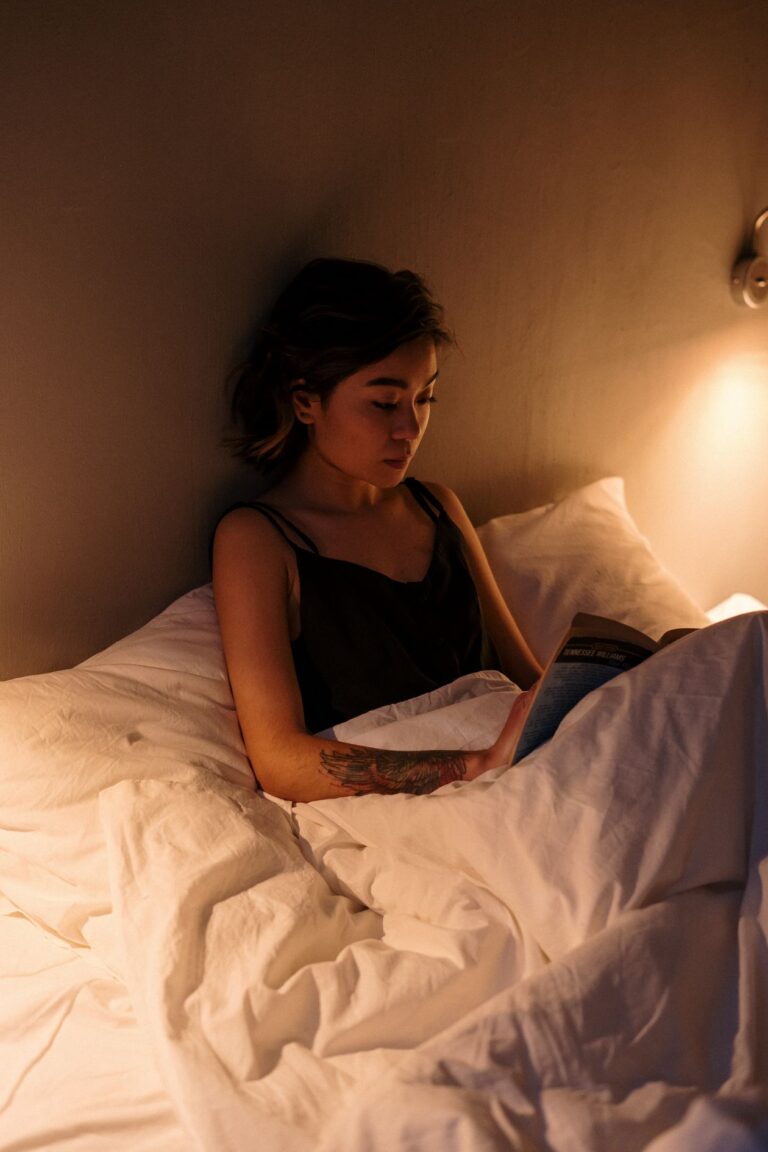
I used to be genuinely bad at falling asleep — not the occasional restless night, but the full production, night after night. I’d get into bed and my brain would launch straight into its greatest hits: replaying awkward conversations, planning tomorrow in exhausting detail, remembering at half eleven that I never replied to my sister. Then I’d check the time, do grim maths on the sleep I could still get, and feel even more awake. My record was 2:13am, composing imaginary emails. I even tried one of those sunrise alarm clocks, which just meant I was awake AND annoyed.
What fixed it wasn’t a gadget or a supplement. It was ten boring minutes — same steps, same order, every night. I rolled my eyes when a friend suggested it. But your brain is a pattern-matching machine, and after a couple of weeks it starts shutting down halfway through, because it knows sleep is coming. Like Pavlov’s dogs, except the bell is a toothbrush.
Empty your head onto paper
I start at the kitchen counter with a cheap notepad, writing tomorrow’s three most important tasks in pen on paper. The physical act seems to convince my brain the jobs are handled, so it stops rehearsing them at midnight. Then my phone goes on charge in the kitchen — not the bedroom, the kitchen, next to the toaster. That one change did more than everything else combined, because the scroll-hole can’t reach you from another room.
Make the house feel sleepy
Lights go low — one lamp, or the hallway light with the door ajar. Bright light at 10pm tells your brain it’s daytime, which is spectacularly unhelpful. I make chamomile tea and drink it slowly on the sofa, doing nothing. No telly, no scrolling — just tea, quiet, and the fridge humming. My partner thought I’d joined a cult; now she joins me. The tea goes in my favourite chipped mug, because rituals need props. Weird for three nights, then the best part of the day.
Slow your body down
Bathroom: warm water on my face, teeth brushed, the whole unglamorous ritual at half speed. Then two minutes of gentle stretching on the bedroom floor — neck rolls, reaching for my toes, a child’s pose with actual deep breathing. Nothing that counts as exercise; the point is telling my muscles the day is done. I look ridiculous and I’ve made my peace with it. Then bed with a paper book — never the phone — until my eyes close on their own.
That’s it. Ten minutes, no apps, no equipment, nothing to buy. The magic is in the dull repetition — same steps, same order — until your body learns it by heart. Start tonight, keep it boring, and give it two weeks. Two weeks from now, you’ll wonder why you ever did it differently.
Set the Room Up Like You Mean It
I did the whole routine for weeks and still woke up groggy, and the culprit turned out to be the room itself. Three things matter more than people think. First, temperature: your body needs to drop its core temperature to fall asleep, so a cool room — around eighteen or nineteen degrees — beats a warm one every time. I used to crank the heating and then wonder why I tossed around half the night. Second, darkness: even a sliver of hallway light under the door messes with you. I fixed mine with a five-pound eye mask after ignoring the problem for a month like an idiot. Third, noise: if your street is loud or your house creaks, cheap foam earplugs or a fan for steady background hum. None of this is exciting. None of it costs much. All of it worked better for me than any supplement I ever tried, and I tried a few.
For the Nights It Still Goes Wrong
Even with a perfect routine, some nights your brain won’t cooperate. Here’s what actually helps at 3am: don’t check the time. The moment you see 3:07, your brain starts doing the grim sleep-maths — if I fall asleep NOW I get three hours forty — and you’re done for. If you’re still awake after twenty minutes, get up. Go to a dim room, read something boring on paper, go back to bed when your eyes feel heavy. Lying there “trying harder” to sleep is like trying harder to sneeze. It doesn’t work that way, and the effort just wakes you up more. And watch the naps: a twenty-minute nap before 3pm is fine, even good for you. A two-hour nap at 5pm is just borrowing sleep from tonight at terrible interest rates. I learned that one during a memorable week of 4pm “quick rests” followed by midnight staring contests with my ceiling.
Anchor Your Mornings, Not Just Your Nights
Everyone obsesses over bedtime, but the real anchor is when you get up. Your body clock sets itself from your wake time — get up at the same time every day, weekends included, and within a week or two you’ll start feeling sleepy at the right time in the evening without trying. I resisted this for ages because Saturday lie-ins felt sacred. Then I tried two weeks of 7am every day and my 11pm sleepiness showed up like clockwork. You don’t have to be a 5am person. You just have to be a same-time person. Pick a wake time you can live with seven days a week and protect it.
[…] chemistry all day. Seven to nine hours. It’s the highest-leverage free thing on this list. My evening routine guide covers what helped me wind down — nothing […]