
I still remember the plan that broke me. A screenshot of some influencer’s six-day split, saved on a Sunday night full of good intentions. I followed it for nine days. Missed a Monday, felt guilty, tried to cram two sessions into one Tuesday evening like an idiot, and quietly deleted the screenshot by Friday. Total damage: one week of enthusiasm and a lingering sense that “plans just don’t work for me.”
They do — the problem was the plan, built for someone with no commute and no social life. Mine had to survive a job and weeks where the sofa won.
Years and several abandoned spreadsheets later, here’s what makes a weekly workout plan stick — with the exact sample schedules I’d hand a friend.
Start with your real week, not the one in your head
Forget exercises for a minute. The single most useful thing you can do is an honest audit of your time — the actual time, not the “new year, new me” version.
How many days can you really train? I mean in a normal week — work running late sometimes, friends existing. Be conservative. You can always add a day later, and adding feels like winning. Starting with five days and managing two feels like failing, and that feeling kills plans.
How long? Forty-five minutes is the sweet spot, but a focused thirty, three times a week, done consistently, transforms beginners. A skipped hour does nothing.
Then logistics: gym or home? What equipment do you actually own right now — not what you might buy in January. Build around what exists today.
My rule of thumb: take whatever frequency you first think of, and subtract one day. That’s your start. I train four days most weeks; some weeks it’s three. My plan doesn’t care, because I built it that way. That’s the whole trick.
Pick a frequency you could keep up for three months
Not two weeks. Three months. That’s the timeframe that matters, because that’s roughly when training stops feeling like a chore and starts feeling like just… something you do.
For most people, three or four days a week is genuinely enough to get properly strong. Beginners: three full-body sessions is the sweet spot — every muscle trained often, full recovery between, and you still have a life.
Five or six days? Fine if you’ve been consistent a while and actually enjoy the gym that much. But jumping to six days as a beginner is, in my experience, the number one way plans die by week three. Your body adapts during recovery, not during the workout — rest days are literally when you get stronger, which sounds like an excuse until you understand the physiology.
Choose a split that matches your days
A “split” is just gym-speak for how you divide training across the week. Endless fancy ones exist online. You need three.
Full body — for two or three days a week. Hit everything each session: a push, a pull, a squat or hinge, something for the core. Simple, efficient, and for beginners flat-out the best option. Training each muscle two or three times weekly is exactly how new lifters grow fastest.
Upper/lower — for four days. Two upper days, two lower days. Each muscle still worked twice a week, sessions feel more focused. My personal favourite, for what it’s worth.
Push/pull/legs — for five or six days. Push day (chest, shoulders, triceps), pull day (back, biceps), leg day. Lovely if you live for the gym; massive overkill if you’re starting out.
One plea: don’t copy a pro bodybuilder’s split off Instagram. That person is essentially a professional exerciser. You’re a person with a job trying to get fit. Different sport entirely.
Give every session the same boring skeleton
Whatever split you pick, every session follows the same shape. Warm up five to ten minutes — walk, cycle, or do your first exercise with light weight. Your joints will thank you in a few years.
Then the main work: thirty to forty minutes, three to five exercises, three sets each. Finish with five easy minutes — walking, a few stretches, done.
Yes, it’s boring — boring is repeatable, and repeatable works. I want a session I can run half asleep at 6am.
A 3-day plan for beginners
If you’re new — or coming back after a break, no shame — start here. Full body, three days, at least one rest day between (Mon/Wed/Fri is the classic).
Day 1: Goblet squats 3×10, push-ups 3 sets near-failure (knees fine), dumbbell rows 3×12, glute bridges 3×15, plank 3×30s.
Day 2: Romanian deadlifts 3×12, overhead press 3×10, walking lunges 3×10 per leg, lat pulldown 3×10, dead bugs 3×10 per side.
Day 3: Same as Day 1, but add a rep or a little weight somewhere.
No equipment at home? Same structure with bodyweight swaps. This zero-equipment full-body routine slots right into the template.
A 4-day upper/lower plan
Two months of consistency? Time for the next step. Two upper days, two lower days — every muscle hit twice a week, sessions feel meatier.
Monday (upper): Bench 4×8, bent-over rows 4×10, overhead press 3×10, lat pulldown 3×10, curls 2×12. Tuesday (lower): Squats 4×8, Romanian deadlifts 3×10, lunges 3×12, calf raises 3×15, knee raises 3×12. Wednesday: real rest. Thursday (upper): Incline dumbbell press 4×10, seated rows 4×10, lateral raises 3×12, chin-ups 3×8, pushdowns 2×12. Friday (lower): Deadlifts 4×6, goblet squats 3×10, hip thrusts 3×12, leg curls 3×12, planks 3×45s. Weekend off.
I’ve run this longer than any other setup. For busy people it’s the sweet spot.
A 5-day push/pull/legs plan
Only if four days feels easy and you’re recovering well. Be honest — this is where people lie to themselves and pay for it in month two.
Mon (push): Bench 4×8, overhead press 3×10, incline dumbbells 3×10, lateral raises 3×12, dips 3×10. Tue (pull): Deadlifts 4×6, pull-ups 4×8, barbell rows 3×10, face pulls 3×15, curls 3×12. Wed (legs): Squats 4×8, Romanian deadlifts 3×10, leg press 3×12, lunges 3×12/leg, calf raises 4×15. Thu (push, lighter): Overhead press 4×8, incline bench 3×12, cable flyes 3×12, lateral raises 3×15. Fri (pull, lighter): Barbell rows 4×8, pull-ups 4×6, seated rows 3×12, hammer curls 3×12.
Five days is a real commitment. If life can’t support it, drop to four with zero guilt — a finished four-day plan beats an abandoned five-day plan every time. I know: I’ve abandoned four separate five-day plans. You’d think I’d learn faster.
The part nobody plans
Progression. Boring word, everything-that-matters concept.
Muscles grow because you did a slightly harder workout than last time, repeatedly, for months. Add a rep — 3×8 becomes 3×9. Add a kilo or two. Add a set when something feels easy. Deeply unsexy; works every time.
Log it: phone notes, thirty seconds a session. Want more than the notebook? I wrote a whole piece on tracking your fitness progress properly — the scale lies constantly.
Warning: progress isn’t linear. Some weeks you’re weaker — bad sleep, stress, life. Not failure, just weeks. The trend over months is what matters.
When life wrecks the plan
It will. Build for interruption from day one.
Never miss twice. Missed Monday? Fine — don’t miss Tuesday too. One miss is life; two becomes a week, a week a month. That snowball is how plans actually die.
The twenty-minute rule. Can’t face it? Do twenty minutes of anything. It keeps the habit alive; skipping teaches your brain skipping is allowed.
Swap, don’t stack. Missed a day? Don’t cram two sessions into one. Shift forward or drop it. Bend, don’t break.
Take easy weeks. Every 6-8 weeks, train at half intensity. Planned recovery, not laziness.
Last month I missed three in a row — work chaos, then a cold. Old me would’ve declared the plan dead. Current me restarted Thursday. The plan doesn’t care about your streak; it cares about your average.
The monthly check-in
A plan isn’t a tattoo. Monthly, five minutes, four questions.
Stronger? Check the log — numbers up means change nothing.
Dreading a session? Dread is data: swap the hated exercise for a tolerable one. Done beats perfect.
Recovering? Constant soreness and snapping at people means too much, not too little.
Still fits? New job or commute — move days, keep structure.
Skip this and you drift into classic beginner mistakes: program-hopping, copying Instagram routines, ignoring recovery.
Just start
You don’t need the perfect plan — just a decent one you’ll follow for a year. Honest about time, sustainable frequency, simple sessions, logged numbers, monthly tweaks. That’s the game.
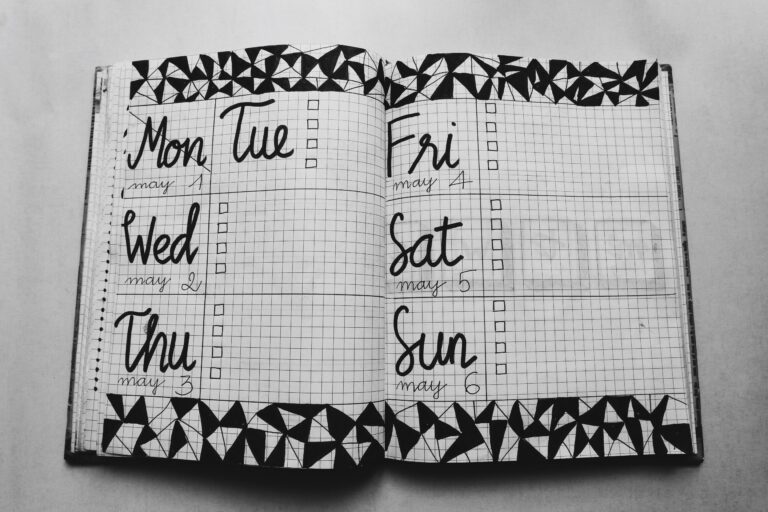
Write it where you’ll see it. In your head it’s a wish; on paper it’s a commitment.
Start this week, not next Monday. Do day one badly. Badly is fine — badly, repeated for three months, becomes what people ask you about. I know. People ask me now. I still remember the screenshot I deleted that Friday.
References
- Schoenfeld BJ et al. “Effects of resistance training frequency on measures of muscle hypertrophy: a systematic review and meta-analysis.” Sports Medicine. 2016;46(11):1689-1697.
- Grgic J et al. “The effects of training frequencies of resistance exercise on muscular adaptations: a systematic review and meta-analysis.” Sports Medicine. 2018;48:1207-1220.
- Schoenfeld BJ et al. “Differential effects of heavy versus moderate loads on measures of strength and hypertrophy in resistance-trained men.” Journal of Strength and Conditioning Research. 2016;30(4):1079-1087.