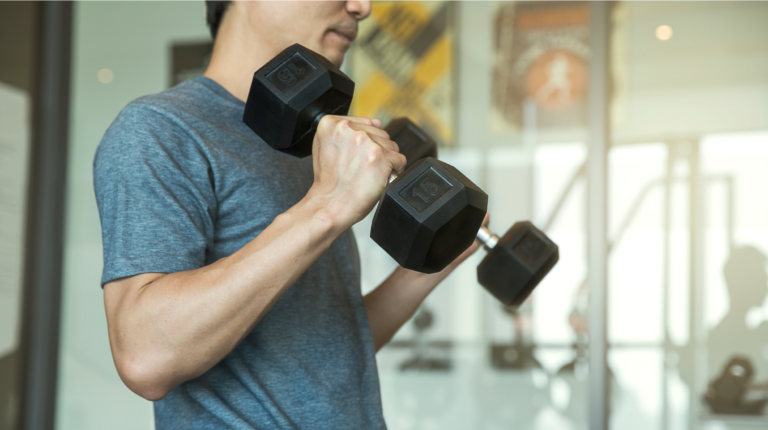
March 2019. I walk into a Planet Fitness — the one with the purple everything — and do what every clueless beginner does. Beeline for the dumbbell rack, grab the 25s (the 15s felt embarrassing), start curling like my life depends on it.
A trainer named Marcus watched for about forty seconds. “Bro,” he said, “you’re gonna hurt yourself.” My shoulder clicked weird for a week after that.
Nobody starts knowing what they’re doing. The people deadlifting three plates in the corner all had a Marcus moment. The difference between them and the quitters is just… they kept showing up after the embarrassing part.
So here’s the guide I wish someone had handed me outside that gym. No fluff, no “47 exercises for shredded abs.” Just what works.
Why Bother Lifting At All?
I’ll be straight — I started because I wanted to look better in a t-shirt. Vanity. Zero shame.
But weird stuff happened that nobody warned me about. I live on the third floor, no elevator, and I used to get winded carrying groceries up. Two months into lifting, I carried two full bags without stopping and just stood in my kitchen grinning. That’s when it clicked — this wasn’t just about mirrors.
The science part: after 30, you lose something like 3-8% of your muscle every decade if you do nothing. It’s called sarcopenia. Strength training is basically the only thing that stops it — one or two sessions a week.
Your bones get denser too. They respond to stress by getting tougher. For women especially this matters, because osteoporosis is no joke and lifting is one of the best defenses.
The metabolism thing is real, just not in the Instagram “boost it 400%” way. Muscle burns a bit more at rest than fat, and a hard session keeps you burning for hours after. Slow. Boring. That’s how the real stuff works.
And the mental side? Picking up a weight you couldn’t lift last month rewires something. It’s concrete proof effort does something. Cheesy? Maybe. True? Yeah.
Before You Touch Anything Heavy
I know you want to skip to the workout. But Marcus lives in my head now, so two minutes.
Form beats weight. Every time.
Start light. A weight you can move for 10 clean reps without your back doing something creative. If you’re swinging it up, it’s too heavy. Drop down. Nobody’s watching — and if they are, they’re thinking about dinner, not you.
Warm up. Five minutes.
Walk fast, jumping jacks, arm circles, leg swings. One easy set of your first exercise. Done. You don’t need some 30-minute mobility ritual off YouTube.
Learn what pain means.
Muscles burning mid-set? Fine. Deep ache the next day? Fine — that’s DOMS, it fades, and walking helps more than couch-sitting.
Sharp joint pain? A pop? Something in your lower back that feels “wrong”? Stop. Not “finish the set” — stop. I ignored a clicky shoulder for three weeks because I didn’t want to “be soft.” Turned a minor irritation into two months off. Don’t be me.
Rest 60-90 seconds between sets. Not 20 seconds, not 5 minutes of scrolling. Set a timer. Feels long at first. You’ll adjust.
The Only 4 Movements That Matter
Every strength exercise is a variation of four patterns. Learn these, you know 90% of the game.
Push. Shoving weight away. Push-ups, bench press, overhead press. Chest, shoulders, triceps.
Pull. Dragging weight toward you. Rows, pull-ups (start with lat pulldowns — pull-ups are humbling), curls. Back and biceps. These keep you from folding into a shrimp over your laptop. I skipped them my first year and had the posture of a question mark.
Squat. Bend knees and hips, butt down, stand up. Bodyweight squats, goblet squats, barbell squats eventually. Quads, glutes, core.
Hinge. The sleeper pick. Push your hips BACK — like closing a car door with your butt when your hands are full. Deadlifts, Romanian deadlifts, kettlebell swings. Hamstrings, glutes, lower back. This is what saves your spine in real life, and most people never do it on purpose.
My test for any program — steal it: does it push, pull, squat, AND hinge? Yes? Solid. Missing one? Incomplete, no matter how fancy.
Your First Routine (3 Days a Week)
Monday, Wednesday, Friday. Full body each time, rest day between. 40-50 minutes per session.
Unpopular opinion: you don’t need a barbell. Dumbbells might actually be better for beginners — each side works independently, so your dominant arm can’t carry the other one. Mine did that for months before I noticed.
No equipment? Also fine — this bodyweight workout guide has bodyweight swaps for everything.
Every session starts with: 5 min easy cardio + one light warm-up set. Don’t overthink it.
The workout (same all 3 days):
1. Goblet squat — 3×10. Hug a dumbbell to your chest. Squat to parallel. Stand. Heels lifting? Widen your stance. full beginner routine
2. Push-ups — 3 sets, max good reps. Too hard? Knees down — that’s how everyone starts, including the Instagram guy doing one-arm push-ups. Aim 8-15 per set.
3. One-arm dumbbell row — 3×10 per arm. Knee and hand on a bench or couch. Pull to your HIP, not your chest. Squeeze the shoulder blade. Fixed my posture more than anything else that year.
4. Romanian deadlift — 3×10. Dumbbells in front of thighs, hips BACK, lower to mid-shin, feel the hamstring stretch, stand tall. Back rounds? Too heavy or too low.
5. Overhead dumbbell press — 3×10. Press from shoulders to overhead. Don’t arch your back into a banana.
6. Plank — 2 sets, hold with good form. Start 20-30 seconds. Build up.
Rest 60-90 seconds between sets. Six exercises, three days a week. That’s the program.
“Shouldn’t I do different exercises on different days?” Not yet. Beginners adapt fastest repeating the same movements. Run this 8-12 weeks. Boring consistency beats exciting variety — I know, nobody wants to hear that.
How You Actually Get Stronger
One concept. Muscles grow when you ask for slightly more than last time. That’s it.
Goblet squats with 20 lbs for 3×10 this week? Try 3×11 next week. Then 3×12. Hit 3×12-15 comfortably? Grab the 25s, drop to 3×8. Repeat for years.
Some weeks you add a rep. Some weeks the same workout just feels easier — that counts. The trend over months is what matters, not any single day.
Write it down. “Goblet squat: 20 x 10, 10, 9.” I trained four months without tracking and basically spun my wheels. The notebook changed everything. Next session you know exactly what to beat.
Realistic pace: first 3-6 months you might double most weights. Then it slows. Both normal. The quitters are the ones who expected month-one speed forever.
Mistakes I Made So You Don’t Have To
Too heavy, too fast. Loaded the bar because light weights felt embarrassing. Shoulder hurt a month. Lost training time. Start lighter than your ego wants.
Mirror muscles only. Chest and arms, chest and arms — while my back was so weak I couldn’t do five proper rows. Truth nobody tells beginners: pulling and hinging build MORE total muscle. Back and legs are huge. Don’t be a front-only person. Full hall of shame: beginner workout mistakes to avoid.
Program hopping. Two weeks, no abs, new YouTube program. Six months, twelve programs, zero progress. Pick one. Run it 12 weeks. Then judge.
Training through bad pain. Sore = fine. Sharp joint pain = stop. I “pushed through” a clicky shoulder. Two-month layoff. Learn from my stupidity.
Ignoring protein. Can’t build a house without bricks. I lifted for months eating like a granola bar was a meal. Stalled hard. Fix: 0.7-1g protein per pound of bodyweight daily. I’m ~175, so 130-160g. Sounds huge until you learn the foods — this high-protein foods guide covers it without the 2009-bodybuilder chicken-breast meal prep.
No rest days. Muscles grow during recovery, not the workout. Three hard days beats six sloppy ones.
Recovery (The Boring Stuff That Works)
Sleep. Most repair happens in deep sleep. I hate how true this is — 5-6 hours and everything feels harder for no reason. 7-9 hours. Free. Highest leverage thing on this list.
Eat enough. Not perfectly — enough. Protein target above, plus total calories. Scale not moving for a month while trying to build? Add 200-300 calories daily. Reassess.
Actual rest days. Walk, stretch, live. Just don’t do another hard workout. Your joints need it even when muscles feel fine.
First 2-3 weeks you’ll be sore after everything. Normal. Walking helps more than sitting. After a month, barely sore — that’s adaptation, not the workout “stopping working.”
Bottom Line
Three days a week. Four movements. Slightly more than last time. Eat and sleep enough. That’s the formula.
Start this week. Not Monday. This week. Grab dumbbells, do the routine, write down numbers. Three months from now you won’t recognize your strength.
The hardest rep is the first one. Go.