Home Blog Page 2

What to Eat Before and After a Workout

0

My relationship with food and training got off to a rocky start. I still remember this one Tuesday — I’d skipped lunch because work was chaos, then tried to do a full weights session on nothing but coffee and optimism. I made it about twenty minutes before the room started tilting. The trainer had to sit me down with a cereal bar. That was my introduction to the idea that what you eat around a workout actually matters. The room-tilting incident taught me more than any article ever has.

The opposite mistake came a month later. I’d read that you should ‘fuel up’, so I ate an enormous pasta lunch and went for a run at two. I’ll spare you the details, but I now understand why nobody sprints after a Sunday roast. Somewhere between starving and stuffed there’s a sweet spot, and finding it changed my training completely.

Eating before you train

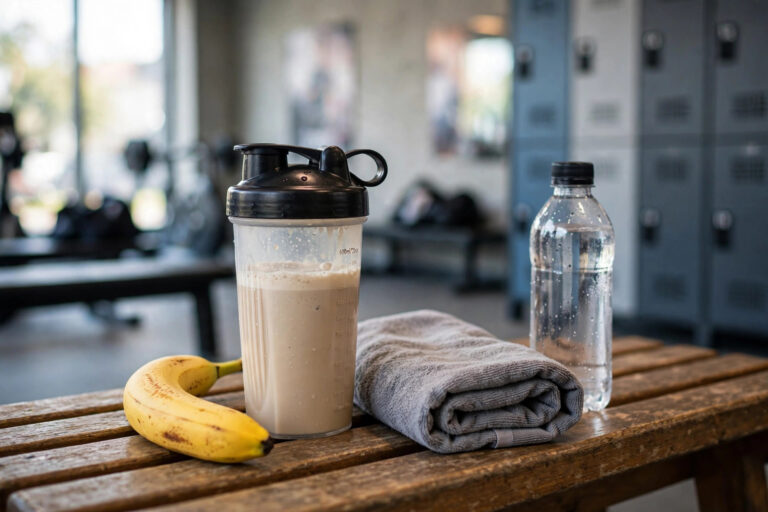
What I eat beforehand depends on timing. If I’ve got a couple of hours, I’ll have something proper — porridge with a banana, toast with peanut butter, leftover rice with chicken. Carbs for energy, a bit of protein, nothing fancy. The key thing I learned: eat enough that you’re not running on empty, but not so much your stomach is doing all the work.

If I’m short on time — and half my sessions are squeezed into a lunch break — I grab something small about half an hour before. A banana. A handful of dates. Once, memorably, three rice cakes in the car park. It doesn’t need to be a production. Your body just needs something to burn that isn’t your own muscle.

Eating after you train

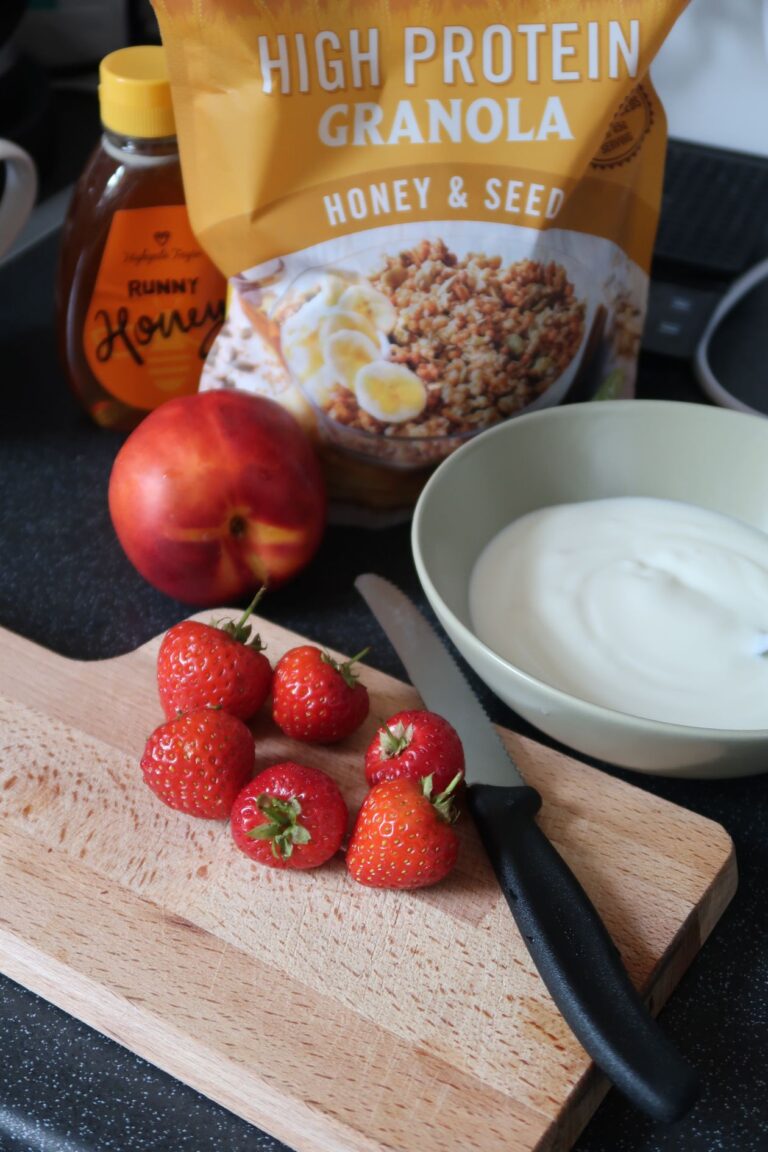
Afterwards, I eat properly. Not immediately — I don’t sprint home to chug a shake inside some magic thirty-minute window, because that window is mostly marketing. But within a couple of hours I have a real meal with proper protein: eggs on toast, chicken and rice, Greek yoghurt with granola, a big sandwich. Twenty to forty grams of protein, plus carbs to replace what I burned. I eat it at the kitchen table, not standing over the sink.

The mistake I made for ages — and I see beginners do it constantly — was training hard then barely eating, because I thought that’s what being healthy looked like. I’d finish a tough session and have a sad little salad, then wonder why I felt wrecked for days. Muscles can’t rebuild out of nothing. If you did the work, feed the work.

So that’s my entire philosophy: don’t train starving, don’t train stuffed, and eat a proper meal afterwards. It’s not glamorous, it doesn’t need a powder, and it works. A banana before and a real dinner after — anyone can stick to that. Start with the banana.

Sort Your Water Before Your Food

For months I thought my pre-workout food was the problem — flat sessions, headaches halfway through, feeling heavy and sluggish. Turned out I was just dehydrated. I’d drink a coffee, train for an hour on nothing else, and wonder why I felt awful. Water timing is dead simple: drink about half a litre in the two hours before you train, sip steadily during (not gallons — just regular sips), and drink properly afterwards until your pee looks like pale straw. Yes, the pee test. It’s free and it works. One mistake to avoid: chugging a huge bottle ten minutes before training. It just sloshes around in your stomach and makes everything miserable. I learned that one the bouncy way, mid-burpee. Sort the water first, then worry about the food — honestly, half the “nutrition problems” beginners think they have are just thirst in disguise.

The Budget Version Works Just as Well

There was a phase where I spent serious money on “proper” fitness food — quinoa, imported nut butters, a protein powder that cost more than my shoes. Then I ran out of money and ate like a student for a month: oats, eggs, tinned tuna, frozen chicken thighs, rice, bananas, lentils, milk, the occasional bag of frozen veg. My training didn’t get worse. It got slightly better, because I was actually eating enough instead of rationing expensive stuff into sad little portions. The fitness industry wants you to believe you need premium fuel. You need protein and carbs, and the cheap versions contain exactly the same molecules. A three-pound bag of oats beats a fifteen-pound “performance breakfast blend” every single time. Spend the savings on literally anything else — or just enjoy having money.

What About Protein Powder, Honestly?

You’ll notice I haven’t mentioned protein powder, and that’s deliberate — you don’t need it. But let’s be fair: it’s convenient, not magic. If you’re genuinely struggling to eat enough protein from real food — busy job, small appetite, student kitchen — a scoop in milk after training does the job fine. Whey is the standard, unflavoured is cheaper, and you can ignore roughly all of the marketing on the tub. I used it for a few months during a chaotic period at work, then dropped it when I started cooking properly again and never missed it. Food first, powder as backup. Anyone telling you it’s essential is selling something. One scoop is roughly 25 grams of protein — about the same as three eggs or a tin of tuna. Do the maths on what fits your life and your wallet, and don’t overthink it.

10-Minute Evening Routine for Better Sleep

1

I used to be genuinely bad at falling asleep — not the occasional restless night, but the full production, night after night. I’d get into bed and my brain would launch straight into its greatest hits: replaying awkward conversations, planning tomorrow in exhausting detail, remembering at half eleven that I never replied to my sister. Then I’d check the time, do grim maths on the sleep I could still get, and feel even more awake. My record was 2:13am, composing imaginary emails. I even tried one of those sunrise alarm clocks, which just meant I was awake AND annoyed.

What fixed it wasn’t a gadget or a supplement. It was ten boring minutes — same steps, same order, every night. I rolled my eyes when a friend suggested it. But your brain is a pattern-matching machine, and after a couple of weeks it starts shutting down halfway through, because it knows sleep is coming. Like Pavlov’s dogs, except the bell is a toothbrush.

Empty your head onto paper

I start at the kitchen counter with a cheap notepad, writing tomorrow’s three most important tasks in pen on paper. The physical act seems to convince my brain the jobs are handled, so it stops rehearsing them at midnight. Then my phone goes on charge in the kitchen — not the bedroom, the kitchen, next to the toaster. That one change did more than everything else combined, because the scroll-hole can’t reach you from another room.

Make the house feel sleepy

Lights go low — one lamp, or the hallway light with the door ajar. Bright light at 10pm tells your brain it’s daytime, which is spectacularly unhelpful. I make chamomile tea and drink it slowly on the sofa, doing nothing. No telly, no scrolling — just tea, quiet, and the fridge humming. My partner thought I’d joined a cult; now she joins me. The tea goes in my favourite chipped mug, because rituals need props. Weird for three nights, then the best part of the day.

Slow your body down

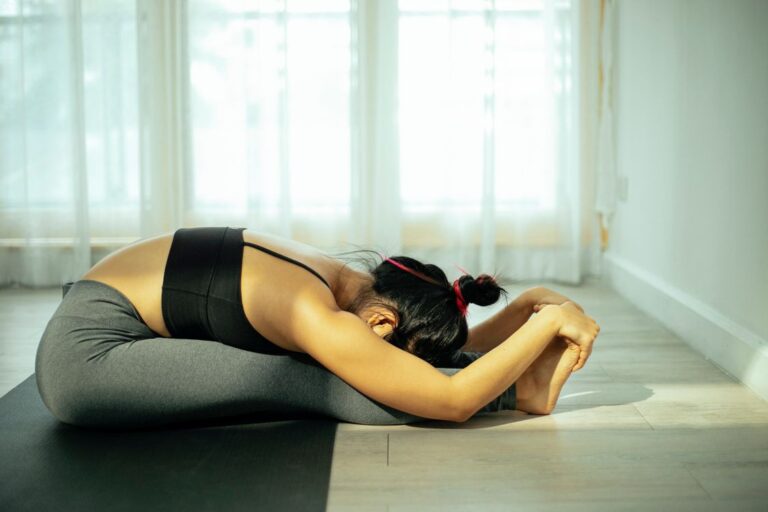
Bathroom: warm water on my face, teeth brushed, the whole unglamorous ritual at half speed. Then two minutes of gentle stretching on the bedroom floor — neck rolls, reaching for my toes, a child’s pose with actual deep breathing. Nothing that counts as exercise; the point is telling my muscles the day is done. I look ridiculous and I’ve made my peace with it. Then bed with a paper book — never the phone — until my eyes close on their own.

That’s it. Ten minutes, no apps, no equipment, nothing to buy. The magic is in the dull repetition — same steps, same order — until your body learns it by heart. Start tonight, keep it boring, and give it two weeks. Two weeks from now, you’ll wonder why you ever did it differently.

Set the Room Up Like You Mean It

I did the whole routine for weeks and still woke up groggy, and the culprit turned out to be the room itself. Three things matter more than people think. First, temperature: your body needs to drop its core temperature to fall asleep, so a cool room — around eighteen or nineteen degrees — beats a warm one every time. I used to crank the heating and then wonder why I tossed around half the night. Second, darkness: even a sliver of hallway light under the door messes with you. I fixed mine with a five-pound eye mask after ignoring the problem for a month like an idiot. Third, noise: if your street is loud or your house creaks, cheap foam earplugs or a fan for steady background hum. None of this is exciting. None of it costs much. All of it worked better for me than any supplement I ever tried, and I tried a few.

For the Nights It Still Goes Wrong

Even with a perfect routine, some nights your brain won’t cooperate. Here’s what actually helps at 3am: don’t check the time. The moment you see 3:07, your brain starts doing the grim sleep-maths — if I fall asleep NOW I get three hours forty — and you’re done for. If you’re still awake after twenty minutes, get up. Go to a dim room, read something boring on paper, go back to bed when your eyes feel heavy. Lying there “trying harder” to sleep is like trying harder to sneeze. It doesn’t work that way, and the effort just wakes you up more. And watch the naps: a twenty-minute nap before 3pm is fine, even good for you. A two-hour nap at 5pm is just borrowing sleep from tonight at terrible interest rates. I learned that one during a memorable week of 4pm “quick rests” followed by midnight staring contests with my ceiling.

Anchor Your Mornings, Not Just Your Nights

Everyone obsesses over bedtime, but the real anchor is when you get up. Your body clock sets itself from your wake time — get up at the same time every day, weekends included, and within a week or two you’ll start feeling sleepy at the right time in the evening without trying. I resisted this for ages because Saturday lie-ins felt sacred. Then I tried two weeks of 7am every day and my 11pm sleepiness showed up like clockwork. You don’t have to be a 5am person. You just have to be a same-time person. Pick a wake time you can live with seven days a week and protect it.

How to Build Muscle at Home Without Weights

1

For years I was convinced building muscle required a gym — the membership, the machines, the mirrors, the blokes grunting in the corner like volume was a training method. Then a baby, a mortgage and a diary with zero white space ended that idea, and the gym became a daydream I had during night feeds.

So I shoved the coffee table against the sofa, cleared a patch of living-room rug, and trained with nothing — no bench, no bands, not even a mat at first. My daughter watched from her bouncer like it was children’s telly. It worked, which annoyed me, because I’d spent years assuming it couldn’t.

Here’s the mechanism nobody explained to me: muscles don’t know what a dumbbell is. They know tension, tiredness, and being asked for slightly more than last time. A barbell delivers that one way; your bodyweight delivers it another — free, and always with you.

Five moves was my whole programme

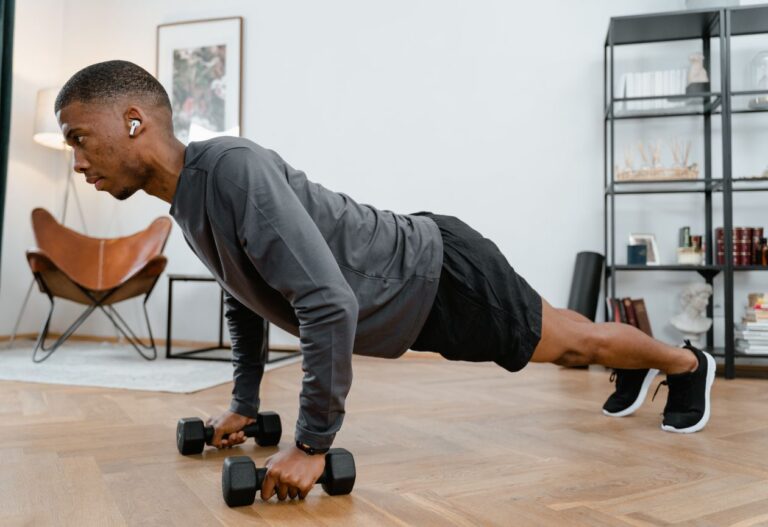
For four months I did exactly five exercises: push-ups, squats, lunges, glute bridges, planks. The list looked embarrassingly short on its sticky note. But a slow push-up — three seconds down, pause at the bottom — humbles people who throw barbells around with sloppy form. I spent weeks fixing my squat because my knees caved in like a folding chair.

Make it a little harder, every week

I nearly went wrong here: for a while I repeated the same comfortable routine, and nothing changed. Muscles are lazy like that. The fix is unglamorous — keep raising the challenge a notch. I went from knee push-ups to full to diamond to archer over most of a year; each jump felt like starting over. Squats became split squats, then Bulgarian split squats, which I moan about constantly.

Eat like you want to grow

My biggest mistake cost me a year. I trained consistently for twelve months and looked exactly the same, because I ate as if the workouts didn’t count. Muscle needs material — around 1.6 to 2.2 grams of protein per kilo of bodyweight daily — and enough food overall that the scales creep up. Once I ate properly, everything finally moved.

Sleep counts as training

Muscle is built between sessions, not during them. I train two or three times a week, sleep seven to nine hours, and take proper rest days. Soreness was never the goal; progress was. The month my sleep got consistent, my push-up numbers jumped by a third.

You don’t need permission or equipment to start — just a patch of floor, five moves, and the patience for one more rep than last time. Twenty minutes today is a real start. A year from now you’ll wish you’d begun sooner.

Your Flat Is Already a Gym (Mine Was, Apparently)

Question: what did you walk past this morning that could make your push-ups harder?

For me it was the hallway. Six metres of it. I’d do ten push-ups every time I crossed it, which sounds insane until you realise I cross that hallway maybe fifteen times a day. That’s 150 push-ups before dinner, none of them hard enough to ruin me, all of them quietly adding up. My wife thought I’d lost it. My chest disagreed.

The rule that makes this work: every set stays easy. Eight reps when you could do twenty. Stop with plenty left. You’re not training — you’re rehearsing. The movement gets smoother, the numbers climb, and your weekly volume doubles without a single “workout”. Kettle-boil squats. Microwave lunges. Doorway rows on the frame (test it first — mine held, my mate’s didn’t, and his landlord is still annoyed). Twenty honest minutes plus a day of sneaky sets beats one heroic Saturday followed by six days of nothing. Every time.

Raid the Kitchen, Not the Shops

Nobody needs to buy equipment. My “weight vest” was a rucksack full of hardbacks — Dostoevsky is surprisingly heavy, who knew — until the strap gave out mid-lunge and Crime and Punishment went sliding across the kitchen floor. My wife laughed for a week. I deserved it.

What actually works, tested by my own clumsiness: a rucksack of books for push-ups and squats (check the zips first, learn from me). A dining chair for dips and Bulgarian split squats — back foot goes up on the seat and you will immediately understand why people hate these. The stairs for calf raises; stand on the edge of the bottom step, slow lowers, and try walking normally the next day. A towel looped around a closed door for rows, but — and I cannot stress this enough — lean back gently first. “Feels solid” and “is solid” are different things, and doors are expensive.

Start stupid-light. Test everything. The house becomes a gym and the only membership fee is the occasional book avalanche.

Film It. Delete It. Get Better.

Mirrors are liars. The moment you look, your form changes — chest up, chin in, performing for yourself.

So once a month I do this: phone balanced on the shoe rack, film one set of squats, one set of push-ups, watch it back immediately. First time, I was horrified. My “deep” squats were knee-bends. My push-ups had a hip sag you could park a bike under. One three-minute video fixed more than six weeks of me confidently doing it wrong.

Nobody sees the footage. It’s not content. Delete it the same day. But do it on a schedule — first Sunday of the month, same two moves — because comparing this month to last month is the most honest progress photo you’ll ever take. No filter survives a side-view squat.

Walking for Weight Loss: The Underrated Fat Burner

0

Here’s a confession: I used to think walking didn’t count as exercise. How could something I did to reach the fridge possibly burn fat? Running was exercise. The gym was exercise. Walking was just transport. Then I looked at the actual numbers, and felt like a bit of an idiot.

Because walking is one of the most underrated fat burners around. It doesn’t punish your joints, it doesn’t leave you starving, and you can do it daily without recovery days. A brisk hour burns roughly 250 to 350 calories depending on your pace — do that most days, and the maths gets interesting fast.

Two years into walking for weight loss, here’s what actually works — and the mistakes that nearly made me quit.

Why walking works when harder exercise doesn’t

Intense workouts have a dirty secret: afterwards, you feel entitled to eat. ‘I ran 5k — I deserve pizza.’ Walking doesn’t trigger that bargain. It burns a meaningful number of calories without spiking hunger, and because it’s gentle you can do it every day. For fat loss, consistency beats intensity nearly every time.

How fast and how far

You don’t need to stride like you’re late for a flight. Brisk is enough — a pace where you can talk but wouldn’t want to sing, roughly 5 to 6.5 km/h. As for distance: 8,000 to 10,000 steps is a fine target, but coming from 3,000, aim for 5,000 first. The biggest returns come from ‘barely moving’ to ‘moving a fair bit’.

Find a hill

Want more burn without more time? Walk uphill. Climbing can nearly double your calorie burn versus flat ground, and it wakes up your glutes like nothing else. No hills nearby — treadmill incline, or stairs. My route has one miserable hill in the middle, and I’ve grown weirdly fond of it.

Make it a habit, not a project

People who succeed treat walking like brushing their teeth, not a 30-day challenge. Anchor it to something you already do: a stroll after lunch, a lap of the block while the kettle boils, walking phone calls instead of sitting. I take every call on foot now — my step count doubled and my back stopped aching.

Don’t eat your walk

This was my mistake. I’d finish a good walk feeling virtuous, then demolish a muffin containing twice the calories I’d burned. Walking melts fat only if you don’t cancel it at the café. Have the muffin sometimes — just know what it costs. A black coffee is a much cheaper celebration.

Track it, but don’t obsess

Your phone’s health app is enough. Watching your daily average creep up over weeks is genuinely motivating. But one low-step day isn’t failure — the trend is what matters. I missed my target plenty of days. My only rule: never miss twice in a row. That alone kept me going.

Walking won’t give you dramatic before-and-after photos in six weeks. It gives you something better: a habit you can keep, joints that don’t complain, and fat loss that sticks — because nothing about your life had to become extreme. Start with twenty minutes. Let the underrated fat burner do its quiet work.

## Just pick a surface already

People ask me “treadmill or outside?” like it’s a personality test. Like the answer will reveal something deep about them.

It’s not deep. The answer is whichever one you’ll actually do on a rainy Tuesday.

I bought my treadmill in March 2023. For four months it was the world’s most expensive clothes rack. Then winter hit, the streets turned into an ice rink, and suddenly that dusty machine looked like salvation. Now I do 3% incline, 40 minutes, phone propped on the console, some true-crime podcast making the time evaporate.

Outdoors is better in every way that doesn’t matter and worse in the one way that does. Uneven ground works muscles you forgot you had. Sunlight genuinely fixes my mood — I didn’t believe that either until I tracked it for a month. And here’s the weird part: I always walk further outside. Twenty minutes on a treadmill feels like a hostage situation. Twenty minutes outside feels like one podcast episode.

But outdoors has weather. And weather has opinions. And my opinions about weather are why I skipped fourteen walks last November.

So: treadmill on weekdays when I’m busy and lazy (most weekdays). Outside on weekends. Stop researching. The best walking surface is the one that’s already under your feet.

## You’ve been stuck in first gear

Most people walk like they’re browsing a museum gift shop. Slow. Aimless. Stopping to look at things.

Walking has gears. Learn them.

Gear one is the stroll. Recovery pace. Phone-call speed. Good after dinner, good on rest days, roughly zero fat-burning happening. That’s fine — not every walk is a workout. Some walks are just… walks.

Gear two is the default most people skip. Brisk. Purposeful. Fast enough that you can talk but singing would be embarrassing. This is where the fat loss lives. If your walks don’t include this gear, you’re just sightseeing.

Gear three is the power walk, and yes, you will look ridiculous. Arms pumping like you’re late for something important. I throw in 90-second bursts during longer walks and my heart rate jumps 20 beats without my knees filing a single complaint. My neighbor saw me once and asked if I was okay. I was. I was thriving, actually.

Your body gets bored of one speed fast. Shift gears. Keep it guessing.

## About that weighted vest

Skip it. For now.

I know, I know — ten to fifteen percent more calorie burn sounds great. Here’s what the ads don’t mention: the weight changes how you walk, and your knees notice before your belly does.

I started with ankle weights because I’m a genius. Two weeks later my hips were sending me strongly worded letters. Ankle weights pull your stride sideways in ways nature never intended. A vest is better — the weight sits on your torso and moves with you — but it’s still extra load on joints that are just getting used to the basic program.

The actual rule: start at five percent of your body weight. Flat ground only. And only once walking is boring — meaning it’s a locked-in habit, not a project you’re still negotiating with yourself about.

Still building the habit? The vest can wait. Master the walk. Fancy later.

7 High-Protein Breakfast Ideas for Busy Mornings

0

I’ll be honest: for years, my breakfast was whatever I could grab on the way out the door — a banana, a granola bar, a coffee that was more milk than coffee. Then ten o’clock hit and my stomach would start up like I hadn’t eaten a thing.

The problem wasn’t that I ate too little — it was that I ate almost no protein. Once I started getting 20 to 30 grams each morning, everything shifted. Mid-morning crash: gone. The 11am vending machine run: history. Even workouts felt less like punishment.

And no, you don’t need to become a 5am meal-prep person. These are the breakfasts I actually make on busy weekdays, most of them half-asleep.

Greek yoghurt with berries and nuts

This is my workhorse — three or four mornings a week. A cup of plain Greek yoghurt has about 20 grams of protein just sitting there. Frozen berries go in and thaw while I find my keys; almonds on top. Ninety seconds, and I’m not hungry again until lunch.

Overnight oats with protein powder

A gift from your evening self to your morning self. Half a cup of oats, a scoop of vanilla protein powder, a spoonful of peanut butter, enough milk to cover it all — jar, fridge, bed. You wake up and breakfast is waiting: creamy, filling, around 25 grams of protein. I do sliced banana; my husband does a worrying amount of honey.

Egg muffins, baked on Sunday

On Sundays I sometimes bake a batch, and future-me is always grateful. Whisk a dozen eggs with whatever’s wilting in the fridge — spinach, peppers, a bit of cheese — pour into a muffin tin, twenty minutes in the oven. Two or three microwaved the next morning: close to 20 grams of protein in under a minute. My kids steal them.

Cottage cheese on toast

I can feel some of you wrinkling your noses. But spread thick on wholegrain toast with tomatoes, salt, pepper and a glug of olive oil, it eats like the inside of a lasagne. A cup has roughly 25 grams of protein. Not a savoury-morning person? Tinned peaches instead of tomatoes. Weirdly brilliant.

A five-minute protein smoothie

My emergency protocol for mornings when sitting down isn’t happening. Protein powder, a frozen banana, a big spoonful of peanut butter, milk — blitz. Tastes like a milkshake, takes five minutes, lands around 30 grams of protein. I’ve drunk an embarrassing number of these in traffic.

Peanut butter and banana toast

Sounds too simple to count, but run the numbers: two slices of wholegrain toast, a proper spread of peanut butter, sliced banana — 15 to 18 grams of protein. Add hemp or chia seeds and you’re past 20. This was my pre-gym breakfast for an entire year; I only stopped because I got bored.

Last night’s leftovers

Who decided breakfast food had to be ‘breakfast food’? Last night’s chicken stir-fry or lentil soup reheats in three minutes and demolishes most cereals on protein. I started doing this on mornings when anything sweet sounded miserable. Never looked back.

You don’t need all seven — grab one or two and try them this week. The goal was never a perfect routine; it’s breakfast that gets you to lunch. Once you feel what enough protein does to your mornings, the rest gets easier.

## The Sunday half-hour that fixes your whole week

You don’t need a full meal-prep operation. You need thirty minutes, once, and your weekday mornings basically run themselves.

Here’s my actual Sunday routine. Eggs go in the oven as muffins — you know the drill by now. While those bake, I portion Greek yoghurt into five jars. Just the yoghurt; toppings go on fresh each morning. Then I make two jars of overnight oats for the days I want something different. Kettle on, coffee in hand, and by the time the egg muffins are done, the whole week is handled.

Total active time? Maybe fifteen minutes. The oven and fridge do the rest.

The real trick is the “grab shelf” — one shelf in the fridge where the week’s breakfasts live. Morning-me, half-asleep and grumpy, doesn’t make decisions. Morning-me grabs from the shelf. Decision fatigue is the actual reason people skip protein, not laziness.

## Three breakfasts that are secretly dessert

Quick warning, because the supermarket is lying to you.

Flavoured yoghurt cups — the ones with the fruit on the bottom — can pack over 20 grams of sugar. That’s a dessert wearing a health halo. Plain yoghurt plus actual fruit takes the same effort, triples your protein, and a fraction of the sugar.

Granola bars marketed as “protein” — check the label before you trust the packaging. Some have 4 grams of protein and 15 of sugar. That’s a candy bar with better PR. If it doesn’t hit at least 10 grams of protein, it’s a snack, not breakfast.

And fruit juice. Just don’t. An orange has fibre and takes time to eat. Orange juice is sugar water that happens to come from fruit. Eat the orange, drink water, and thank me at 11am when you’re not starving.

## Ordering protein at a café without the awkwardness

Some mornings the kitchen isn’t happening. Fine. Here’s how to eat protein at a café without becoming that person.

“Omelette with whatever vegetables you’ve got” — every café on earth can do this, and it lands you 20+ grams of protein. Add a side of toast and you’re set until lunch.

Greek yoghurt bowl, if they have it. If they don’t, cottage cheese on toast — you’re already converted, remember?

And watch out for the classic coffee-shop trap: the giant flavoured latte plus a pastry. That’s roughly 600 calories with maybe 8 grams of protein, and you’ll be hungry by ten. Black coffee or a flat white, plus actual food. Your wallet and your stomach both win.

How to Stay Consistent With Exercise

1

Okay. Confession time. I have started and quit working out more times than I can count. Two January gym memberships — both dead by February. A 30-day challenge where I made it to day 11 and then just… didn’t. And there’s a treadmill in my garage right now that’s basically a $600 clothes rack. It holds jackets. It holds them very well.

So if you’re googling how to stay consistent with exercise at 11 PM on a Sunday, feeling guilty about the week you just skipped? Hi. Same. Here’s the thing, though — after years of failing at this, I finally cracked it. Not with discipline. Not with some 5 AM grindset nonsense. With design. Here’s what actually worked.

How to stay consistent with working out starts with killing motivation

I stopped waiting to feel motivated. Here’s my hot take: motivation is useless. It shows up all excited on January 1st and it’s gone by the 9th. What actually works is making the start so easy you’d feel silly saying no. My rule became: just put on my workout shoes. That’s it. That’s the whole rule. Shoes on. Most days, once the shoes were on, I’d do something. Some days I literally took them off and sat back down on the couch. Fine. The habit wasn’t “exercise.” The habit was “shoes.” And weirdly? It worked.

Make the workout embarrassingly short

My old plan was an hour at the gym, five days a week. Ambitious. Also fictional — I never once did it. New plan: 15 minutes, three days a week, bodyweight stuff in my living room. Here’s what nobody tells you: a 15-minute workout you actually do beats the perfect hour-long workout you keep skipping. I can always do more once I start. Starting is the hard part, so I made starting stupid-easy. Sometimes I’d finish the 15 minutes and keep going because — surprise — I was already moving. Sometimes I didn’t. Both counted.

Put it on your calendar like it owes you money

“Exercise sometime this week” = never happens. “Tuesday, Thursday, Saturday, 7 AM” = happens. I made an actual calendar event. Set a phone reminder and everything. When 7 AM hits, I don’t think about it. I don’t debate it. I just go. Thinking is the enemy here. Routines don’t need decisions — they need a time slot.

Pick stuff you don’t hate (revolutionary, I know)

I spent YEARS forcing myself to run because that’s what fit people do, apparently. I hate running. Every single second of it — the bouncing, the wheezing, the existential dread at mile one. Turns out I like lifting weights and I don’t mind yoga. The second I stopped doing workouts I dreaded, staying consistent got like 10x easier. Hate the gym? Dance around your kitchen. Hate mornings? Go at lunch. The best workout is the one you’ll actually do. Cliché because it’s true.

Track it on paper like a kindergartener

There’s a calendar on my fridge and every workout day gets a big red X. Childish? Absolutely. Effective? Insanely. After two weeks of X’s I couldn’t stand the thought of breaking the streak. I think Jerry Seinfeld did this for writing jokes — don’t break the chain. Works for push-ups too, apparently. Don’t knock it till you’ve got a month of red X’s staring you down.

Plan for the bad weeks before they happen

Because they always come. Travel. Getting sick. Work exploding. My old pattern: miss three days, feel guilty, quit for six months. New rule: never miss twice. Miss Monday? Whatever. But Tuesday is happening. One missed workout is just life. Two in a row is the beginning of quitting. Saying it out loud to myself — “never miss twice” — sounds dumb. It works anyway.

Tell someone so they can annoy you into showing up

I mentioned to a friend I was working out three times a week, and suddenly she’s texting me “did you train today?” every Tuesday. Annoying. Extremely effective. Accountability works even when you resent it. Pick someone who won’t let you off the hook with “it’s fine, rest is important.”

So yeah. After all these years, here’s what I actually believe: learning how to stay consistent with exercise has nothing to do with discipline or willpower. It’s just design. Make it easy. Put it on the schedule. Pick something you don’t dread. Track it. Tell someone. I went from quitting every February to training consistently for two years straight. And I’m the person with the treadmill clothes rack. If I can do this, you definitely can.

Motivation is a flaky friend

Last March I missed eleven workouts in a row. Eleven. Not because I was injured or busy — because I kept “forgetting.” My shoes were in the closet. My gym bag was unpacked. Every workout required six small decisions, and at 6:40 in the morning my brain vetoes every single one of them.

So I stopped trusting myself. Best decision I ever made.

Now my shoes live by the front door. I trip over them on the way to the couch — which is the point. The dumbbells sit next to the TV, judging me during commercial breaks. The yoga mat stays unrolled in the living room corner. My apartment looks like a crime scene. I have never been more consistent.

Your environment nags better than you ever will. It doesn’t get tired, it doesn’t negotiate, it doesn’t have “a long day.” Rearrange the furniture. Let the room do the remembering.

Dress like you’re five

Every decision you make in advance is one your 6:40am brain doesn’t get to sabotage.

Gym bag packed the night before. Clothes laid out on the chair — shirt, shorts, socks, the whole sad little outfit, like I’m five years old and mom did it. Water bottle filled and sitting on top of the bag so I can’t miss it.

I also removed the exits. Phone charges in the kitchen now, not the bedroom, because the snooze button was costing me forty minutes a day. The TV remote lives in a drawer during workout windows. Sounds extreme. My “just one episode” habit was eating three evenings a week.

Here’s the principle, and it’s embarrassingly simple: make the good choice the easy one and the lazy one slightly annoying. Not impossible. Just annoying enough. You’re not building discipline. You’re building a hallway with no exits.

Your system will break (plan for it)

Vacations. Houseguests. The week your kid gets sick and your whole schedule detonates.

My beautiful door-shoe system means nothing in a hotel room. So I have a rule for wrecked weeks: never twice. Miss Monday? Fine. Life happens. But Tuesday is non-negotiable, even if “workout” means ten pushups on the hotel carpet at 11pm while everyone else sleeps.

I also keep a minimum viable workout in my back pocket: 15 minutes, bodyweight, no equipment, no excuses. It’s not impressive. That’s the point. On the worst day of the month I can still do fifteen unimpressive minutes, and the streak survives.

Perfection is what kills consistency, by the way. Not laziness. Perfection. The people who quit are the ones who missed a week and decided the whole thing was ruined. The streak isn’t the point. Coming back is.

5-Minute Morning Stretch Routine

0

Do you wake up feeling like the Tin Man? Because I did. Every morning. Stiff neck, creaky back, shoulders basically attached to my ears. I’d shuffle to the kitchen like a zombie and wonder how my body got this old without asking me first.

Then a friend — she’s a physical therapist, so she actually knows things — told me to try a 5 minute morning stretch routine every morning. I laughed in her face. Five minutes? That’s not going to do anything. Reader, it did something. I tried it for two weeks just to prove her wrong. The difference was honestly kind of ridiculous.

My 5 minute morning stretch routine, step by step

Here’s what I do now. Usually while my coffee’s brewing, because otherwise I’d forget. No mat. No special clothes. I’m literally in my pajamas, barefoot on the kitchen floor. 30 seconds per stretch, per side. Breathe slow. And don’t force anything — if it hurts, you’re doing it wrong. It should feel like relief.

Shoulders first. Big slow circles, backward, ten times. Then forward, ten times. I do this while waiting for the kettle to boil. Gets rid of that weird tension from sleeping in a dumb position. Then ear to shoulder — gently! No yanking your own head around — hold it, switch sides. Your neck will thank you, I promise.

Spine next. Hands on your knees. Round your back like a Halloween cat, then arch it the other way. Slow. Five times. I swear I can feel every single vertebra waking up. Sounds dramatic. Feels amazing.

Then this lunge-twist thing. Right foot forward, left hand on the floor inside your foot, right arm reaches up to the ceiling. Hold. Breathe. Switch. Hits your hip flexors and hamstrings and upper back all at once. My hips were SO tight when I started. Like, embarrassingly tight. Desk job. Sitting all day. You know how it is.

Hamstrings: just hinge forward at the hips and hang. Let your upper body dangle toward your toes. Don’t bounce. Don’t stress about touching the floor — I can’t, and I’ve been doing this for months. Just hang there and breathe. 30 seconds. Then roll back up slowly. I get a head rush sometimes, which means I’m standing up too fast. Oops.

Last one: clasp your hands behind your back, squeeze your shoulder blades together, lift your hands a little. Chest opener. If you hunch over a laptop all day like me, this one feels INCREDIBLE. Like, groan-out-loud good.

That’s the whole thing. Five minutes.

Here’s what I didn’t expect: it changed more than my body. Those five quiet minutes became this little ritual that tells my brain “okay, day’s starting.” I drink less coffee now, which is weird. I catch myself sitting up straight without thinking about it. And my lower back — which used to start aching around 3 PM every single day — barely bugs me anymore.

My first mistake was trying to make it complicated. Downloaded an app. Made a playlist. Tried to “optimize” my routine. Lasted three days, obviously. What actually stuck? Same stretches. Same order. Every morning. While the coffee brews. Attach it to something you already do and it just… happens.

One week. Try it for one week. I bet you won’t stop.

By 2pm my shoulders are earrings

Mornings are handled — you’ve got the routine. But around 2pm my shoulders migrate north until they’re basically earrings, and my lower back starts filing grievances.

So I do a desk version. Ninety seconds. Nobody notices.

Seated spinal twist first: sit tall, cross one leg over, twist toward it using the chair back as leverage. Twenty seconds each side. Your mid-back will make sounds that seem illegal. They’re fine. It feels incredible.

Then chin tucks, which look absolutely deranged. Pull your chin straight back — yes, give yourself the double chin, on purpose — ten slow reps. This single move did more for my “laptop neck” than an $80 massage gun. I’m still mad about the $80.

Finish standing: hands on your lower back, gentle backbend, fifteen seconds. One move that undoes eight hours of hunching. I do the whole thing when I get up for water. My 3pm slump is now more of a 3pm shrug.

I fell asleep doing this last Tuesday

The morning routine wakes you up. This one shuts you down. I do it in bed, which tells you everything about the effort level.

Legs up the wall. Scoot your butt against the wall, let your legs go vertical, and just… lie there. Two minutes. Sounds like nothing. My heart rate drops and the day drains out of my legs like water. Last Tuesday I woke up at 1am still in that position, drooling slightly. Five stars. Would recommend.

Then the lying figure-four: one ankle over the opposite knee, hug the bottom leg toward you. Thirty seconds per side. If you sit all day — and be honest, you do — your hips are storing every stressful email you’ve ever received. This move gives some of it back.

Three minutes total. Lights low, phone face-down. I fall asleep faster on nights I do this. Placebo? Maybe. Don’t care. It works.

The clicking shoulder incident

Okay, real talk. Stretching fixes stiffness. It does not fix everything, and I learned this the stupid way.

My right shoulder started clicking in June. Not painful, just… clicky. I stretched around it for four months because stretching “mostly helped.” Then it started aching during pushups, and I finally saw a physio, feeling very clever.

Two sessions. That’s all it took to fix what six months of shoulder circles hadn’t touched. Turns out I had an actual impingement, not a tightness problem. The physio was very polite about my four months of denial.

So here’s the line: sharp pain (not tightness — pain), numbness, tingling down an arm or leg, or anything that hasn’t budged after two or three consistent weeks? That’s not a stretching problem anymore. That’s a “see a professional” problem.

Stretch daily. Love it. But listen when your body escalates from whispering to shouting. I wish I had.

High-Protein Foods Every Beginner Should Know

1

Protein. When I started working out, I thought that word meant exactly one thing: plain chicken breast. Every. Single. Day. I lasted about three weeks before I wanted to throw a chicken breast at the wall. Here’s what I wish someone had told me back then about high protein foods for beginners — getting enough protein is actually easy. And it doesn’t have to taste like cardboard. You just need options.

9 high protein foods for beginners (that aren’t boring)

Eggs. Start here. Cheap, easy, and each one has like 6 grams of protein. I eat three most mornings — scrambled, fried, boiled, whatever. That’s 18 grams before my day’s even started. Pro tip: hard-boil a bunch on Sunday. Grab-and-go snacks all week. I keep them in a bowl in the fridge and just… eat them. Sometimes with hot sauce. Don’t judge.

Greek yogurt. This stuff changed my snacking completely. One cup = 15 to 20 grams of protein. Regular yogurt? Like 5. It’s not even close. I do berries and honey on top and it basically tastes like dessert. One warning though — check the label. Some brands load it with so much sugar it might as well be ice cream. Looking at you, fruit-on-the-bottom.

Chicken breast, the classic. 31 grams of protein per 100 grams. Super lean. But real talk? Chicken thighs taste WAY better and they’re barely higher in fat. I cook thighs like four nights a week because I’d rather enjoy my dinner than suffer through dry breast meat. Compliance beats perfection. Every time.

Canned tuna and salmon. Pantry heroes. For those nights when cooking feels impossible — you know the ones — tuna + mayo + mustard + celery on toast. Five minutes. 25 grams of protein. Done.

Cottage cheese. I know. The TEXTURE. It weirded me out too, I’m not gonna lie. But a cup has 25 grams of protein, and here’s the trick — blend it with cocoa powder and it tastes like chocolate mousse. I’m serious. Try it before you knock it.

Lentils and chickpeas, for my plant-based people. Or anyone cutting back on meat. A cup of cooked lentils = 18 grams of protein plus a ton of fiber. I make red lentil dal every couple weeks. Costs basically nothing. Feeds me for days. My freezer is never without a container of it.

Tofu. Doesn’t get enough love. Half a block has around 20 grams of protein and it just absorbs whatever you cook it with. Press it, cube it, get it crispy in a hot pan with soy sauce. Total game changer. My meat-eating friends steal it off my plate, I’m not kidding.

Protein shakes. I was SO skeptical about these. Seemed like gym-bro nonsense. And yeah, real food is better. But a scoop of whey in milk after a workout is 30+ grams in 60 seconds flat. For busy beginners? That’s the difference between hitting your number and not. I keep a tub in my kitchen. Chocolate flavor. Tastes fine.

How much do you actually need, though? Rough guide: about 1.6 grams per kilo of bodyweight per day. So if you’re 70 kg, that’s around 110 grams. Spread it out — 25 to 35 grams per meal, plus a snack or two. You’ll hit it without even thinking about it.

My big mistake early on? Trying to be perfect about all of this. Tracking every gram, stressing about it. Exhausting. Now I just keep a few of these staples around and protein takes care of itself. Way more sustainable.

Protein on a budget (my grocery bill disagrees with fancy health food)

Real talk: protein gets expensive fast if you let it. Those little single-serve Greek yogurts? Highway robbery. Pre-marinated chicken breasts? You’re paying someone else to sprinkle salt on them.

Here’s what I actually buy when money’s tight. Eggs, obviously — still the cheapest protein on the planet. Dried lentils instead of canned; one bag costs next to nothing and makes something like ten meals. Chicken thighs in the big family pack, not the sad little two-pack. Frozen fish fillets — same protein as fresh, half the price, and they don’t go weird in your fridge if you forget about them for two days. Ask me how I know.

And store-brand Greek yogurt. Same 15 to 20 grams per cup as the fancy stuff. I did a side-by-side taste test once because I’m that person. Couldn’t tell the difference with berries on top.

One thing though — peanut butter. Everyone calls it a protein food. Two tablespoons gives you 8 grams of protein and 200 calories. The math just isn’t great. I still eat it, because it’s delicious, but I don’t count it as a protein source. It’s a treat that happens to have some protein. There’s a difference.

The part nobody tells you: it’s about per-meal, not per-day

Here’s something that took me way too long to figure out. Your body doesn’t really do “banking” protein. You can’t eat a mountain of it at dinner and call it a day. It works better spread out — roughly 25 to 35 grams per meal, three or four times a day.

Breakfast is where most people blow it. Toast and coffee? Maybe 6 grams. Then you’re playing catch-up all day and wondering why you’re starving at 9 PM. I flipped my breakfast to three eggs or a big bowl of Greek yogurt, and my evening snacking just… dropped off. I wasn’t even trying. My body just stopped asking for food at night because it had actually been fed in the morning.

Quick visual if you hate counting: a palm-sized piece of meat or fish, or a fist-sized scoop of lentils or beans, per meal. That’s roughly 25 to 30 grams. Do that three times a day plus one protein snack — yogurt, boiled eggs, a shake — and you’re past 100 grams without a spreadsheet.

10 Practical Weight Loss Tips That Actually Work

1

I’m going to be straight with you. I’ve tried basically every diet thing out there. Keto. Intermittent fasting. That one horrible week where I ate nothing but cabbage soup — do NOT recommend, my kitchen smelled like a swamp for days. After all that trial and error, you know what I figured out? The boring stuff works. The unsexy basics. Here are the practical weight loss tips that actually moved the needle for me.

10 practical weight loss tips that actually worked for me

Protein. Eat more of it. I used to have this sad little bowl of cereal for breakfast and then I’d be STARVING by 10 AM, raiding the office snack drawer like a raccoon. Now? Three eggs, or Greek yogurt with stuff in it. I’m good until lunch. Just get a palm-sized chunk of protein at every meal — chicken, fish, eggs, beans, whatever you like. It keeps you full way longer. Game changer, honestly.

Water before meals. My trainer told me this ages ago and I literally rolled my eyes at him. Sorry, Marcus. But then I tried it — big glass of water, ten minutes before dinner — and I just… ate less. Without trying. Turns out half my “hunger” was just thirst. Who knew. (Everyone knew. Everyone but me.)

Vegetables should take up half your plate. I know, I know. But here’s how I actually do it: every Sunday I roast a massive tray of whatever — peppers, zucchini, broccoli, cauliflower, doesn’t matter. 25 minutes in the oven. Then all week, half my plate is just… done. No thinking required.

Walk. That’s it. That’s the tip. I don’t run — my knees filed a formal complaint years ago, and honestly I find running boring as hell. But a 30-minute walk after dinner? With a podcast? I look forward to it. Doesn’t even feel like exercise.

Sleep more. When I was getting five hours a night I wanted to eat everything sweet and greasy in a five-mile radius. Once I started sleeping seven-plus hours, the cravings just… calmed down. Nobody talks about sleep as a weight loss tool and I don’t get why.

Stop drinking your calories. Oh man, this one hurt. My daily fancy latte? Almost 400 calories. I had no idea. Switched to black coffee — took two weeks of being miserable about it — and the scale started moving without me changing anything else. Wild.

Eat slower. I used to inhale dinner in seven minutes flat while watching TV. Barely tasted it. Now I actually… chew? Taste things? Revolutionary concept, I know. Your brain needs like 20 minutes to realize you’re full. Give it a chance.

You’re going to mess up. Last month I ate an entire pizza by myself on a Friday night. The whole thing. Old me would’ve been like “well, week’s ruined” and ordered pizza again Saturday. New me just had eggs on Saturday morning and moved on. One bad meal means nothing. Quitting means everything.

Set up your kitchen so the easy choice is the good one. Fruit on the counter where I can see it. Nuts at eye level. Cookies? I just don’t buy them anymore. Can’t eat what’s not there. This isn’t willpower, it’s logistics.

Track something that isn’t the scale. My weight bounced around every single day and it drove me insane. Now I measure once a week and take a photo once a month. Way less stressful. The trend is what matters, not today’s number.

That’s it. Nothing magic, nothing miserable. Pick two or three of these, do them for a month until they’re just… what you do. Then add another. That’s how it actually works, in my experience.

When to actually expect results (read this before you quit)

Nobody tells you the timeline, so here’s the honest version. Weeks one and two? You’ll probably drop weight fast. Don’t get excited — that’s mostly water. Your body dumping stored carbs takes a few kilos of water with it. Enjoy it, but know it’s not all fat.

Real fat loss is boring and slow: roughly half a kilo to a kilo per week. That’s it. That’s the speed. I know it sounds like nothing, but do the math — that’s 6 to 12 kilos in three months. That’s a different person.

And around week four to six, the scale will just… stop. For no reason. You’re doing everything right and nothing moves. This is the moment most people quit. Don’t. It’s called a plateau and it’s completely normal — your body’s adjusting. Mine lasted three weeks once. I nearly threw my scale out the window. Then it started moving again like nothing happened.

When should you actually change something? If nothing’s moved for three full weeks — not three days, three weeks — then tweak one thing. Smaller dinners, or two extra walks a week. One change. Not five.

The weekend problem (my personal villain)

Here’s a pattern I lived for years: perfect Monday through Friday, then the weekend arrives and I eat like I’m being paid per calorie. Friday pizza, Saturday brunch, Sunday “well, the week’s basically over” dessert.

Do the brutal math with me. Five good days might put you 2,000 calories under. One reckless weekend can erase all of it — easily 2,500 over. You end the week exactly where you started, and you have no idea why, because “I was so good all week!”

What fixed it for me: one free MEAL per week, not a free weekend. Saturday dinner, I eat whatever I want. Genuinely whatever. But breakfast and lunch that day are normal, and Sunday I’m back on plan. You still get the thing you’re craving, but it can’t nuke five days of work in 48 hours.

Healthy Meal Planning Basics for Beginners

0

Real talk? I used to be the person standing in front of an open fridge at 7 PM. Starving. Zero plan. Just… staring at condiments like they’d magically become dinner. That’s how pizza ended up at my door three times a week. True story.

Meal planning sounded like something for those super-organized people. You know the ones. Label makers, color-coded calendars, probably iron their socks. Not me. But then I tried it — badly, I might add — and even my embarrassing first attempt cut my grocery bill by like a third. So here’s my healthy meal planning for beginners guide. The un-fancy one.

Start stupidly small. My first “meal plan” — and I use that term loosely — was just picking three dinners for the week. Wrote them on a sticky note. Stuck it on the fridge. Monday: pasta. Wednesday: chicken stir-fry. Friday: tacos. That was IT. Felt way too simple to matter. But those three little decisions killed three evenings of “ugh, what’s for dinner” panic. You can get fancier later. Start dumb.

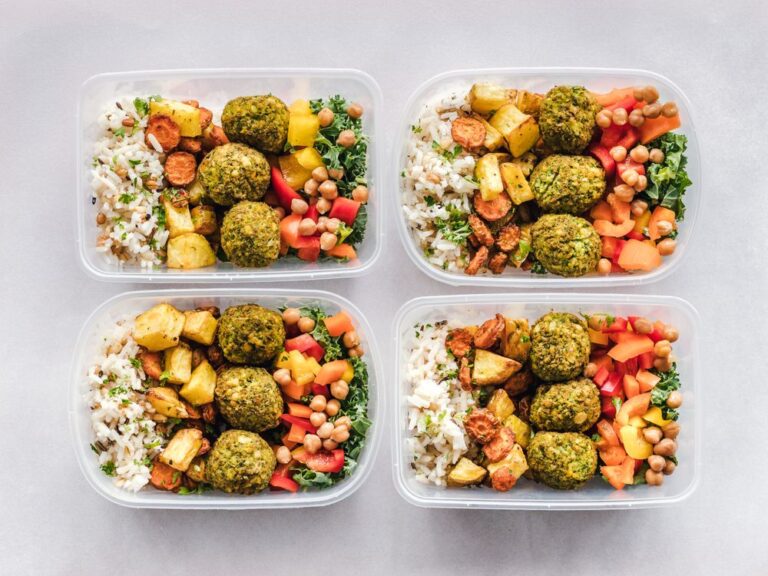
The plate thing. Someone taught me this and it changed everything: half the plate vegetables, quarter protein, quarter grains or starchy stuff. That’s the whole system. No app needed. Chicken + rice + a pile of roasted broccoli. Lentils + rice + spinach. Once you do it a few times it becomes automatic and you stop thinking about it entirely.

Keep a list of meals you actually like. Mine lives in my phone notes. Like 12-15 meals. Sunday comes around, I pick five. Done. Is it repetitive? A little. But you know what’s worse? Standing in the grocery store at 6 PM having a crisis because you have no idea what to cook. I’ll take repetitive.

How to meal plan on a budget: shop with a list

Shop with a list. Or honestly, don’t go. Every time I “just pop in” for one thing I walk out $30 poorer with a cart full of snacks I absolutely did not need. Now: plan the meals, write down exactly what I need, buy only that. And stick to the edges of the store — produce, meat, dairy. The middle aisles? That’s where money goes to die. And where the Oreos live. Coincidence? I think not.

Prep ingredients, not full meals — the healthy meal prep for beginners trick that actually works. I tried the whole meal-prep-container thing. You know, the Instagram ones with the little compartments. By day four that reheated chicken breast made me genuinely sad. Never again. Now I just prep parts — cook some rice, chop veggies, boil eggs, wash greens. Dinner takes ten minutes to throw together. Future me is always grateful.

Keep backup food around. Because some weeks just… fall apart. Mine do, regularly. Freezer: frozen stir-fry veg, always. Pantry: canned beans, tuna, oats. A mediocre backup plan beats a drive-through every time. Every. Time.

And look — you’ll mess it up. I still have weeks where the whole plan collapses by Wednesday. Difference is, now I just start again Thursday. No guilt spiral. No “I’ll restart Monday.” It’s not a test. It’s a tool. Tools still work when you use them imperfectly.

Try it for a month. Your wallet will thank you. Your energy probably will too.

Give your week themes (the laziest planning trick I know)

Decision fatigue is real. By Sunday evening my brain has made approximately ten thousand decisions, and picking five dinners feels impossible. So I cheated: I gave each day a theme.

Monday: meatless. Tuesday: tacos or wraps — something in a tortilla, the bar is low. Wednesday: stir-fry, built around whatever vegetable is dying in the fridge. Thursday: pasta. Friday: whatever’s easy, usually eggs or leftovers.

That’s it. Now “what’s for dinner Wednesday” isn’t an open question anymore — it’s stir-fry, I just pick the protein. The theme does half the thinking for me. And honestly? Nobody in my house has complained about the repetition. They’re just happy dinner exists.

My actual 10-minute Sunday reset

People picture meal planning as this big Sunday production. Mine takes ten minutes, tops, and I do it with coffee. Here’s the whole routine.

One — glance at the week. Any late work nights? Dinner with friends Thursday? I plan around real life, not some fantasy version of it.

Two — pick five dinners from my phone list. Five, not seven. Life happens; two nights will sort themselves out.

Three — write the grocery list from those five meals only. Not “groceries” in general. Those meals, those ingredients.

Four — order online or go to the store with the list. In and out. No wandering.

That’s the entire system. Ten minutes on Sunday saves me probably two hours of weeknight chaos. Best trade I’ve ever made.

Eating out without torching the whole plan

You’re going to eat at restaurants. That’s life, and any plan that pretends otherwise is lying to you. So here’s my restaurant rule: decide BEFORE you go.

Seriously — check the menu online, pick your meal in advance. Because the version of you that’s starving and smelling fries makes very different choices than the version of you on the couch. I always go in with a pick: protein plus vegetables, whatever form that takes. Grilled chicken and salad. Fish tacos. A burger with a side salad instead of fries — I’m not a monk.

And the one-plate rule: what fits on one plate, no going back for more. Buffets are where plans go to die, so I just don’t do them anymore. Learned that one the expensive way.